Long-Term Care is our core platform. Actively pursuing Pharmacy, Distribution & Consumer/Beauty acquisitions (EBITDA $600K+).

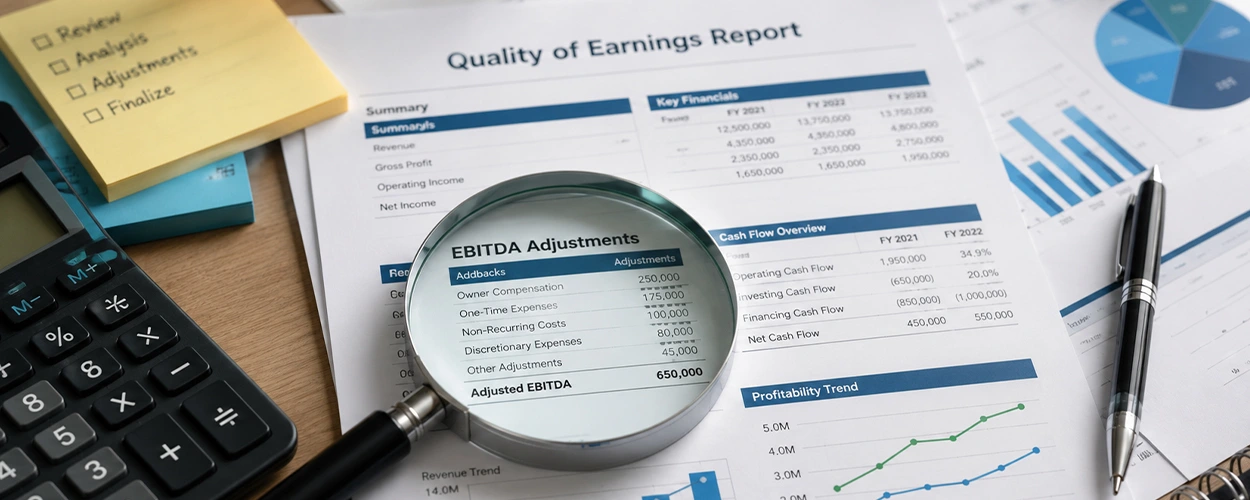
A quality of earnings report is one of the most important pieces of financial due diligence, period. Instead of just glancing at the top-line numbers, it digs into a real question, is this profit genuine, and will it still be there once the deal is signed? That’s not the same job an audit does. An audit primarily verifies the accuracy, completeness, and compliance of financial statements with applicable accounting standards. Quality of Earnings Report goes further. It picks apart why the numbers look the way they do, stripping out one-off gains, odd expenses, or accounting decisions that quietly inflate how healthy the business actually looks. That’s exactly why buyers, sellers, lenders, and investors lean on it so heavily during a business acquisition. It cuts through the spreadsheet and shows what’s actually happening underneath before anyone signs a check. In this Star Capital blog, learn what a quality of earnings(QoE) report is and why it is important.
A quality of earnings report, often called a QoE report, is a detailed look at a company’s financial performance to assess “how real and repeatable its earnings are”. It’s not about whether the books are technically correct. It’s about whether the profit shown on paper reflects the true, ongoing health of the business. This matters a lot in financial due diligence, because a company can look profitable while relying on things that won’t happen again: a big one-time sale, a lawsuit settlement, or expenses pushed into the next year. A quality of earnings analysis digs into these details and separates the earnings you can count on from those you can’t. That’s why it’s such a critical piece of business due diligence for anyone putting real money on the line.
Numbers on spreadsheets don’t tell the whole story on their own, and that’s the gap a QoE report fills. Here’s what it actually does for the people involved in a deal:
Sellers who go through a quality of earnings due diligence process before listing their business often walk away with fewer surprises and stronger offers, simply because they have already cleaned up what a buyer would find anyway.
A QoE report isn’t only for massive corporate deals. It shows up in a lot of situations, including:
This is where the report earns its keep. A full quality of earnings analysis usually covers four main areas.
Revenue Analysis
This part looks at where the money is actually coming from revenue quality, how much of it depends on just one or two big customers, how much is recurring versus one-time sales, and whether revenue is being recognized at the right time.
EBITDA Adjustments
The analyst normalizes owner compensation, strips out non-recurring expenses, removes personal expenses run through the business, and adjusts for any extraordinary gains or losses. What’s left is called adjusted EBITDA, and it’s usually the number buyers actually care about.
Working Capital Analysis
This section checks accounts receivable, inventory levels, accounts payable, and how cash flow trends have moved over time. It shows whether the business needs more cash tied up in operations than the owner realizes.
Cash Flow & Financial Statement Review
Finally, the analyst reviews the income statement, balance sheet, cash flow statement, general ledger, and trial balance to make sure everything ties together and nothing’s been missed.
|
Quality of Earnings Report |
Financial Audit |
|---|---|
|
Focuses on earnings quality |
Focuses on accounting compliance |
|
Used in acquisitions |
Used for regulatory reporting |
|
Identifies risks |
Verifies accuracy |
|
Supports valuation |
Supports financial reporting |
An audit tells you the books follow the rules. A QoE report tells you whether the profit behind those books is real and repeatable.
A QoE report and a business valuation aren’t competing tools; they work together. The QoE report figures out the true, adjusted earnings a business is generating. The valuation then uses that adjusted number to estimate what the business is actually worth. Buyers often request both because a valuation built on unverified numbers isn’t worth much. Get the earnings right first, then the valuation holds up.
A solid QoE report tends to increase buyer confidence, which supports a higher valuation rather than a lower one. It also identifies the real value drivers in the business the things actually worth paying for and it prevents last-minute price cuts that happen when a buyer finds something troubling on their own instead of hearing about it upfront.
A quality of earnings report gives both buyers and sellers a clear, honest picture of a company’s true financial performance. It validates which earnings are sustainable, uncovers risks hiding in the numbers, and supports a valuation that both sides can actually trust. Getting a QoE report done early before a deal is even on the table tends to streamline due diligence, strengthen your negotiating position, and improve the odds that the deal actually closes the way you expect it to. A QoE report helps make business sales clear and smooth. Star Capital is here to make the acquisition process simple and stress-free.
Most QoE reports take two to six weeks, depending on how clean the company’s financial records already are and how complex the business is.
It depends on the deal. Buyers usually commission their own QoE report as part of due diligence, but sellers increasingly order a sell-side QoE report ahead of time to get in front of any issues.
Small businesses benefit too, especially in a sale or acquisition, since even a modest deal can fall apart over financial surprises that a QoE report would have caught early.
It doesn’t automatically end a deal. It usually leads to renegotiating the price, adjusting deal terms, or asking the seller to fix the issue before closing.
It’s not recommended. Buyers and lenders expect an independent, professional review, since a report prepared by the owner carries far less credibility during negotiations.

Whispering Winds RCH
37 Clarks Ave,
East Haven, CT 06512
Phone : 571-406-7827
Email: wwinfo@wwrch.com
42220 Sweet Court
Chantilly, VA 20152
Phone : 571-406-7827
104 Marylin Street
Goose Creek, SC 29445
Phone : 843-572-7442
SHULER HEALTH CARE
250 pitts street, kernersville,
NC, 27284
Phone : 336-996-0772
503 W Buncombe Street,
Roper, NC, 27970
Phone : 252-791-0002
ELTON RCH
30 W Main Street,
Waterbury, CT, 06702
Phone : 203-756-1229
Waterbury Garden RCH
128 Cedar Ave,
Waterbury, CT
Phone : 475-306-6888